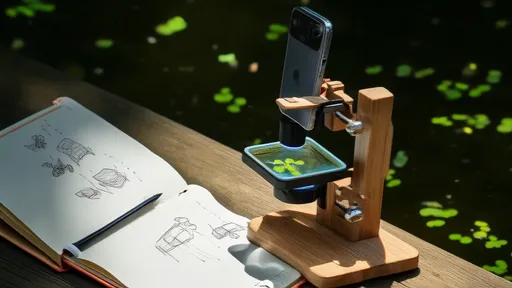
In the age of citizen science and DIY innovation, a fascinating trend has emerged among amateur microscopists: transforming ordinary smartphones into powerful tools for observing plankton. What began as a niche hobby has now blossomed into a global movement, thanks to an ingenious 20-yuan DIY device that’s democratizing microscopic exploration. This pocket-sized gadget, often crafted from recycled materials, is revealing the invisible world of aquatic microorganisms to anyone curious enough to peer through their phone’s camera.
The concept hinges on a simple yet brilliant adaptation. By combining a cheap laser-cut acrylic lens holder with a high-magnification micro-lens (readily available from online marketplaces), enthusiasts can achieve up to 200x magnification—enough to distinguish the intricate structures of diatoms or the pulsating movements of copepods. What makes this breakthrough remarkable isn’t just its affordability, but how it bypasses the need for expensive laboratory equipment. Beachcombing biologists and kitchen-table scientists are now documenting phytoplankton diversity with tools that cost less than a restaurant meal.
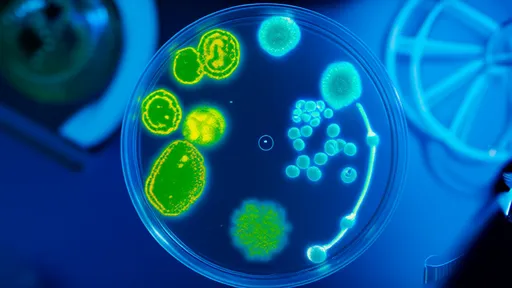
Social media platforms have become flooded with surreal close-ups captured using these DIY setups. One viral video shows a Daphnia’s translucent heart beating rhythmically, its antennae bristling with microscopic hairs. Another reveals the geometric perfection of a cyanobacteria colony, glowing emerald green under makeshift LED illumination. These aren’t professional research images—they’re snapshots taken by teenagers in Jakarta, schoolteachers in Nairobi, and fishermen in Norway, all sharing their discoveries with hashtags like #PlanktonPioneers.
The movement has spawned unexpected collaborations. In coastal communities from the Philippines to Portugal, local researchers are crowdsourcing plankton data from these amateur observations. When thousands of smartphone users document seasonal algal blooms or invasive species, scientists gain invaluable wide-area monitoring without deploying expensive equipment. This symbiotic relationship between professionals and citizen scientists is rewriting the rules of marine biology fieldwork.
Workshops teaching the DIY microscope technique have popped up in unlikely venues. Public libraries in Toronto host "Plankton Pop-Up Labs," while tech hubs in Bangalore organize "Micro-Safaris" for slum children. The barrier to entry keeps lowering—recent iterations use salvaged DVD player lenses or even droplets of clear epoxy resin as improvised optics. One Malaysian innovator demonstrated how to build a functional unit using nothing but a soda bottle cap and glue stick.
Beyond its scientific value, the phenomenon carries profound educational implications. Teachers report skyrocketing engagement when students capture videos of living paramecia instead of staring at textbook diagrams. In rural India, where microscopes are scarce, biology students collectively built thirty phone attachments from scrap materials for their entire grade. "They started calling the plankton ‘water aliens’ and begged for extra lab time," recounted a Chennai educator. The emotional impact of seeing life’s hidden complexity firsthand appears to transcend cultural and economic divides.
Technical limitations do exist. Chromatic aberration plagues the cheapest lenses, and focusing requires steady hands. Yet the community constantly innovates—Facebook groups share blueprints for 3D-printed focus adjusters, while others develop smartphone apps that stack multiple images for clearer detail. Some tinkerers even attach polarizing filters to enhance contrast, revealing plankton structures invisible under normal light.
Environmentalists see broader applications. Oil spill responders in Indonesia now train volunteers to document plankton health as an early pollution indicator. Coral reef conservation projects distribute the DIY kits to track zooplankton populations that feed juvenile fish. "These aren’t toys—they’re legitimate monitoring tools," insists a marine NGO director in Bali, where local teens recently discovered a previously unrecorded diatom species using modified smartphones.
The trend’s cultural ripples extend beyond science. Abstract plankton photography has inspired jewelry designers in Berlin, while a Tokyo musician composed symphonies based on radiolarian movement patterns. An art collective in Reykjavik projects smartphone plankton videos onto icebergs during Arctic exhibitions, creating eerie, dancing light shows visible for miles across glaciers.
As the technology evolves, so do its possibilities. Recent experiments involve attaching microfluidic chips to create portable labs that analyze plankton DNA. Others are developing AI apps that automatically classify species from smartphone images. Yet at its core, the movement remains about wonder—the childlike thrill of discovering that a single drop of pond water contains more alien creatures than most sci-fi movies. In an era of climate anxiety and environmental loss, these 20-yuan devices aren’t just scientific tools—they’re portals to hope, revealing nature’s relentless creativity at scales we’re only beginning to understand.
By /Aug 18, 2025
By /Aug 18, 2025
By /Aug 18, 2025
By /Aug 18, 2025
By /Aug 18, 2025
By /Aug 18, 2025
By /Aug 18, 2025
By /Aug 18, 2025

By /Aug 18, 2025
By /Aug 18, 2025
By /Aug 18, 2025
By /Aug 18, 2025
By /Aug 18, 2025

By /Aug 18, 2025
By /Aug 18, 2025
By /Aug 18, 2025
By /Aug 18, 2025
By /Aug 18, 2025
By /Aug 18, 2025

By /Aug 18, 2025
